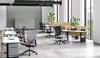
Senior living communities are evolving—placing greater emphasis on wellness, independence, social connection, and resident-centered design. Today’s operators are expected to deliver environments that balance comfort, experience, and functionality with high-quality care.
With these expectations rising, the spaces residents live in and the furniture that supports them matter more than ever. The right selections support safety, durability, and aesthetics. The wrong ones can lead to frequent replacements and increased costs—while the correct ones elevate both the resident experience and long-term value.
Here’s what to prioritize and what our senior living designer recommends in the field.
- Safety & Accessibility Should Be the First Priority
- Comfort Without Compromising Support
- Durability & Cleanability
- Flexibility & Multi-Use Functionality
- Aesthetic Warmth: Avoiding the Institutional Look
Safety & Accessibility Should Be the First Priority
Safety and ease of use aren't just checkboxes — they directly affect whether residents use the furniture at all, and whether staff can do their jobs efficiently.
What our designer recommends:
- Seating with built-in support features
Look for armrests with grip support, appropriate seat and arm height, and sturdy construction.
- Seating with mobility-focused design
Features like front casters (rather than full mobility) can allow controlled movement without compromising stability.
- Dining tables that support comfort, access and hygiene
Tables with laminate surfaces and urethane edge profiles (like those from Purtech) help prevent moisture & bacteria buildup, support cleanability and reduce discomfort and/or bruising for aging skin.
Tables featuring an X-base can provide improved surface accessibility for wheelchairs or more petite users.

SurfaceWorks Purewood edge texture table with x-base
Why it matters: When safety and accessibility are prioritized, furniture supports independence, reduces risk, and enables residents to move with confidence and ease.
The Importance of Real-World Testing
We recently tested the Kwalu Portici chair in a cafe setting at a Tacoma, WA senior living community, allowing staff and residents to evaluate the comfort, ease of use, and mobility in real time.
After delivering the Portici demo chair, we watched as it was tested by a resident & his wife, who was using a walker. It was easy for him to help her lower down into the chair. He was then able to use the handgrip to slightly elevate the back, engage the front casters and easily maneuver her to the dining table. The sloped arms provide a comfortable and natural resting position for the user and support back to standing. This chair also easily slides under the table when not being used. We left the chair for a week, and the residents gave it 10 stars. The maintenance team was impressed by how easily scratches are removed and due to the construction of the chair legs, caster repairs are unlikely.
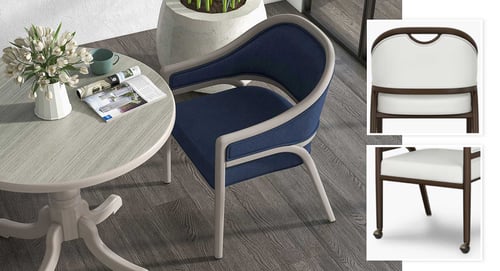
Kwalu Portici armchair with optional hand grip and caster.
For this same project we also specified:
Volterra Lounge & Sofa — selected for its balanced seat height, depth, and arm design, supporting both comfort and ease of use for residents.
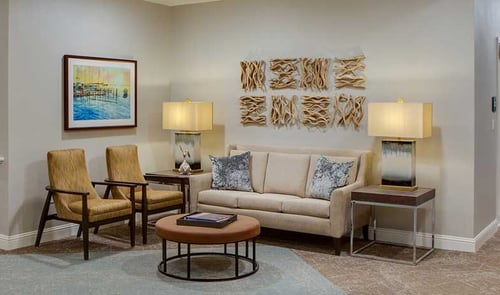
Reference image of the Kwalu Volterra Sofa.
This setting is not part of the actual project and is shown for inspiration.
Comfort Without Compromising Support
In senior living environments, comfort is about more than softness—it’s about support. Seating that is too deep or overly soft can make it difficult for residents to sit down and stand up safely. The right balance ensures comfort and stability.
What to prioritize:
- Proper seat height, depth, and arm height/design
- Commercial-grade foam that is supportive without being too firm
- Durable construction designed to maintain stability and performance over time
What our designer recommends:
Manufacturers offering seating that feature durable and/or reinforced construction and protective, easy-to-clean or antimicrobial arm caps.
Some examples from Carolina, a partner manufacturer, include:
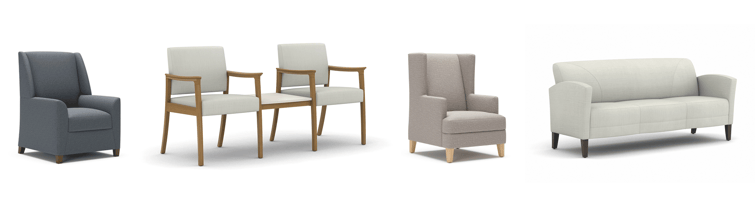 Carolina seating featuring, from left to right: Hide Wingback, Modern Amenity chairs, Seek Wingback, and Voyage Sofa.
Why it matters: Well-designed seating reduces strain, promotes independence, and ensures long-term performance in active communities.
Durability & Cleanability
In high-traffic senior living environments, furniture that looks good on day one but degrades within two years is a liability — not an asset. Durability and cleanability need to be evaluated together.
What our designer recommends:
- Durable and protective finishes
Kwalu’s protective finishes and Falcon’s Tufgrain (extruded aluminum with a wood look) are examples of frames/ finishes engineered to withstand heavy use while maintaining their appearance.
- Proven construction
Manufacturers like OFS/Carolina, Krug, Global, and Stance offer strong wood frames and finishes designed for long-term performance.
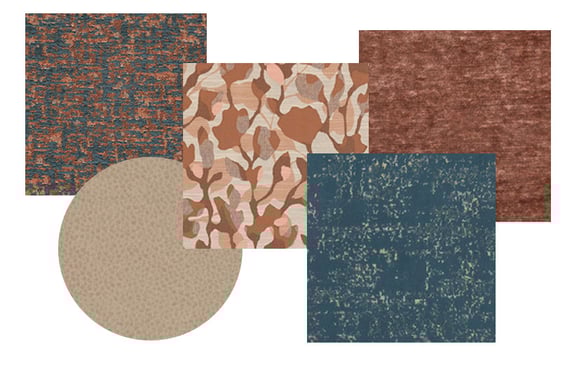
- Performance upholstery
Upholstery should feel inviting while delivering durability and longevity. Look for materials with moisture barriers, stain resistance, and bleach-cleanable properties.
A range of options from manufacturers like CF Stinson, Architex, DesignTex, Burch, Mayer, and Momentum are commonly used in these settings.
- High-performance textiles and vinyls
Coated, PVC-free materials and faux leathers are excellent options for high-traffic spaces, with many offering bleach-cleanable performance.
- Hygiene guidelines
It is important to specify materials that are compatible with the end user’s sanitation processes. Specification sheets are available from most commercial upholstery manufacturers to help evaluate how materials perform with different cleaning products.
Why it matters: If residents or staff don’t trust a chair, they won’t use it. The right materials contribute to the trust and help create comfortable, inviting spaces that encourage socialization while still standing up to daily use.
Flexibility & Multi-Use Functionality
Senior living spaces require furniture that adapts to changing activities and supports both residents and caregivers.
In activity rooms used for group programs like crafts, games, and chair yoga, furniture should balance durability, comfort, and ease of use.
What our designer recommends:
- Stable and sturdy construction
- Easy to move and reposition
- A coordinated chair family (arms, no arms, bariatric, hip) to accommodate all users while providing a consistent look
- Stackable for efficient storage
- Metal, aluminum, or composite frames
- Upholstered seat and back for comfort
- Flex-back to support movement
Some manufacturers offering solutions for these areas include Carlina, HON, and Global.
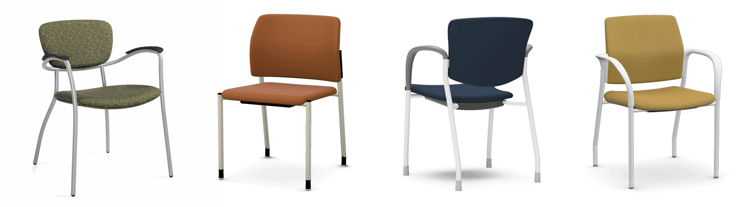 From left to right: Carolina Lynx+, HON Ignition Guest, Global Caprice, and HON Accommodate.
Why it matters: Flexible furniture accommodates programming changes, events, and evolving community activities.
Aesthetic Warmth: Avoiding the Institutional Look
Senior living environments should feel welcoming, where color, pattern, and variation play an important role.
As residents age, it becomes harder to distinguish transitions, so contrast and layering are key throughout.
A few principles our designers apply:
- Using contrasting finishes to define transitions such as flooring to wall and a darker chair frame on a lighter floor
- Incorporating larger-scale patterns, while avoiding harsh geometrics or swirls that may cause visual discomfort or balance issues
- Prioritize warmer wood tones such as maple, cherry, and walnut to promote comfort & relaxation
- For Memory Care environments specifically: Avoid nubby fabrics, exposed fibers, or patterns/textures that may encourage picking

Contrasting flooring to wall tones, with the Carolina Elara sofa anchoring the space.
Why it matters: Thoughtful aesthetics support emotional wellbeing, reduce stress, and help residents feel more at home.
Our Expertise
Our team brings deep experience across healthcare, workplace, and senior living environments, applying proven strategies in safety, durability, and flexibility to every furniture plan.
Senior Designer Rebecca has led multiple senior living projects, developing tailored furniture solutions, color palettes, wayfinding and artwork solutions for common areas and memory care spaces while balancing design quality with budget and function.
If you’re planning a refresh or exploring new furniture solutions, we can help you evaluate your space and recommend the right approach.
Contributor:

Senior Designer / Account Manager